Establishing a Baseline When Cycles Are Already Irregular
AMH and repeated FSH testing replace the cycle-day protocol when periods turn unpredictable.
Irregular cycles don't disqualify a woman from establishing a meaningful hormonal baseline. They change the strategy entirely: what gets tested, when it gets drawn, and how the results get read.
Why irregular cycles break standard hormone testing logic
Consider the instruction a woman is typically given before hormone testing: come in on day 2, 3, 4, or 5 of the cycle, counting from the first day of bleeding. That instruction assumes a period arrived on schedule, and that another one is coming on a predictable timeline after it. For a woman in perimenopause who hasn't bled in seven weeks, or who bled for two days and stopped, or whose last three cycles ran 24, 41, and 19 days, that instruction has nothing to attach to. There is no day 3, because there is no reliable day 1 to count from.
This is not a problem confined to a small, unlucky subset of patients. Cleveland Clinic describes irregular periods as generally the first sign of perimenopause. The testing protocol built around cycle regularity fails first and worst for exactly the population that most needs a hormonal read. A woman with textbook-regular cycles can usually locate day 3 without much trouble. A woman whose cycles have already started destabilizing, the one asking the most urgent questions about what's happening to her body, is the one for whom that instruction is hardest to follow.
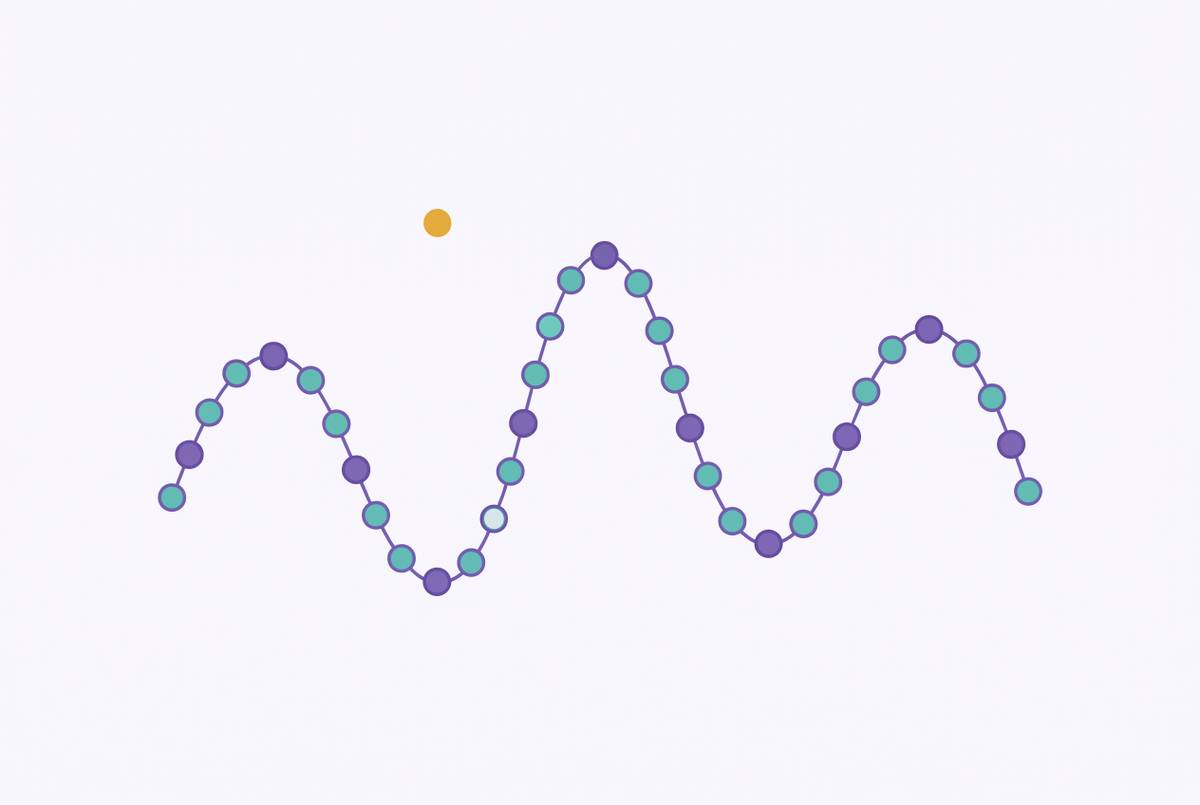
The deeper issue goes beyond scheduling. Even when a blood draw lands on a given day, perimenopausal hormones don't behave with the kind of day-to-day stability that makes a single reading trustworthy. Harvard Health notes that FSH levels can fluctuate dramatically from one day to the next, so a single FSH value is not a reliable indicator on its own. Natural Cycles describes estrogen's path through mid-perimenopause not as a gradual decline but as an increasingly erratic squiggle, surging unpredictably in one stretch and dipping sharply in the next. A woman who tests once, at a somewhat arbitrary point in an unpredictable cycle, might get a result that looks reassuringly normal, one that looks alarming, or one that flatly contradicts whatever she was told three months earlier. Without a framework for reading that variability, each of those outcomes tends to produce either false comfort or needless panic.
Hormone shifts across the perimenopause stages and the order for testing
The apparent chaos of perimenopausal hormone results has an underlying order to it. That order is what turns a confusing set of numbers into something interpretable.
Estradiol is, somewhat counterintuitively, the last major hormone to fall, and in the earlier stretch of perimenopause it can rise. Natural Cycles describes early perimenopause as sometimes producing an estrogen-dominant phase, with bloating, breast tenderness, and heavy bleeding, driven by the fact that progesterone has already started dropping while estradiol stays elevated or swings unpredictably. Harvard Health confirms the same pattern from a different angle: estrogen may drop precipitously or spike higher than normal during the transition, while FSH climbs in what amounts to the pituitary gland's attempt to push the ovaries into producing more estrogen than they're able to sustain.
That pattern helps explain why AMH, anti-Müllerian hormone, functions as an early signal. AMH reflects ovarian reserve, the pool of remaining egg follicles, and it begins declining years before a woman notices any change in her cycle length or regularity. A woman whose periods are still arriving like clockwork can have an AMH reading already in decline, long before FSH or estradiol show anything unusual.
Late perimenopause looks nothing like early perimenopause. Natural Cycles describes this later stage as marked by progesterone approaching zero, cycles stretching long and becoming highly irregular, and estrogen eventually settling at a lower, more stable level. A woman in this later phase should expect a hormonal picture that differs from the estrogen-dominant early phase, and reading her results against early-phase expectations will produce confusion.
Reinforcing this, Oova's analysis of real-world data from more than 10,000 women found that perimenopause doesn't present as one trajectory but as four distinct hormone patterns, each carrying its own symptom fingerprint. There is no single hormonal template to measure a woman against. The stage she's actually in determines what her numbers ought to look like, and knowing where in that sequence she sits is what makes a given result meaningful.
Markers stable enough to anchor a baseline when cycle timing is unreliable
Given that cycle-day testing is often impossible to execute precisely, the practical question becomes which markers still deliver useful information regardless of timing. Some hormones swing wildly across the cycle. Others hold steady enough to be drawn almost whenever blood can be taken, and those are the ones worth building a baseline around.
AMH deserves the central position in that baseline. Unlike FSH and estradiol, AMH stays stable across the menstrual cycle, so it can be drawn on any day, regardless of where a woman stands in her cycle. Because AMH starts declining years ahead of noticeable cycle irregularity, a low or falling AMH reading in a woman whose cycles have already become unpredictable confirms that ovarian aging is genuinely underway rather than being some temporary disruption from stress, illness, or travel.
FSH still matters, but it needs to be read differently once cycle timing can't be trusted. Harvard Health is direct about this: a single FSH reading isn't reliable, because day-to-day levels can swing substantially. What gives FSH diagnostic weight is repetition: two readings, spaced four to six weeks apart, that both come back elevated. One elevated FSH value proves very little on its own. Two elevated values, consistently spaced, start to tell a real story.
FSH also reads differently depending on what estradiol is doing at the same time. A high FSH paired with a low-to-normal estradiol suggests one physiological picture, while a high FSH paired with an elevated estradiol suggests a different one. Drawing the two together produces more diagnostic information than either number provides alone.
Estradiol by itself resists simple interpretation in perimenopause, because there isn't a stable normal range to compare a single result against the way there would be in a woman with regular, predictable cycles. What matters with estradiol is direction over multiple readings, not where any one value lands on a reference chart.
A comprehensive panel at baseline would reasonably include FSH, estradiol, progesterone, LH, thyroid markers, and androgens such as testosterone and DHEA-S. Not every number in that panel will be immediately actionable on day one. The value of drawing them together is that the combination, captured at a single moment, becomes the starting record against which every future round of testing gets compared. Thyroid markers belong in that first draw for reasons worth returning to shortly, since thyroid dysfunction can produce a symptom picture that overlaps heavily with perimenopause itself.
Testing without a reliable cycle day
Once the right markers are identified, the next question is practical and immediate: if day 3 doesn't exist, when does the blood actually get drawn? The answer involves a shift in what timing is meant to accomplish. Instead of chasing a specific cycle day, the goal becomes establishing a consistent, repeatable reference point, because comparing results over time delivers the real diagnostic value in this context.
For women who still have some cycle activity, even sporadic and unpredictable activity, early follicular phase remains the most interpretable window for FSH and estradiol whenever it can be identified. If a period does arrive and day 3 or 4 can be pinned down, that window is still preferable, because the follicular environment carries the least interference from luteal-phase progesterone. When a period shows up unexpectedly after a long stretch of nothing, testing within the first few days of that bleed captures something close to a follicular baseline, even if the cycle around it is far from regular.
For women in amenorrhea, or whose cycles are so unpredictable that no reliable follicular window can be identified at all, AMH remains available at any time, with no cycle-day qualification attached. FSH and estradiol drawn during a stretch of amenorrhea still carry real interpretive weight when read together: elevated FSH alongside low or mid-range estradiol is consistent with ovarian aging even in the complete absence of cycle timing. The priority in that situation shifts from finding the theoretically correct day to documenting the actual conditions of the draw: the date, the last known period, the symptoms present at the time. That context is what lets a future reading be measured against something concrete.
The interval between tests carries as much weight as the timing of any individual test. For women under 40, or between 40 and 45 under some clinical guidelines, a repeat FSH drawn four to six weeks after an initial elevated reading adds far more diagnostic confidence than a single well-timed result ever could. For women over 45, clinical diagnosis is generally favored, and routine FSH repeat testing is often not recommended at that stage. Testing at a consistent approximate interval, with symptom context noted each time, builds a trajectory that no individual reading, however carefully timed, is able to provide. The absence of a reliable cycle day is a reason to test differently, and to test again.
Reading variability in results rather than dismissing it
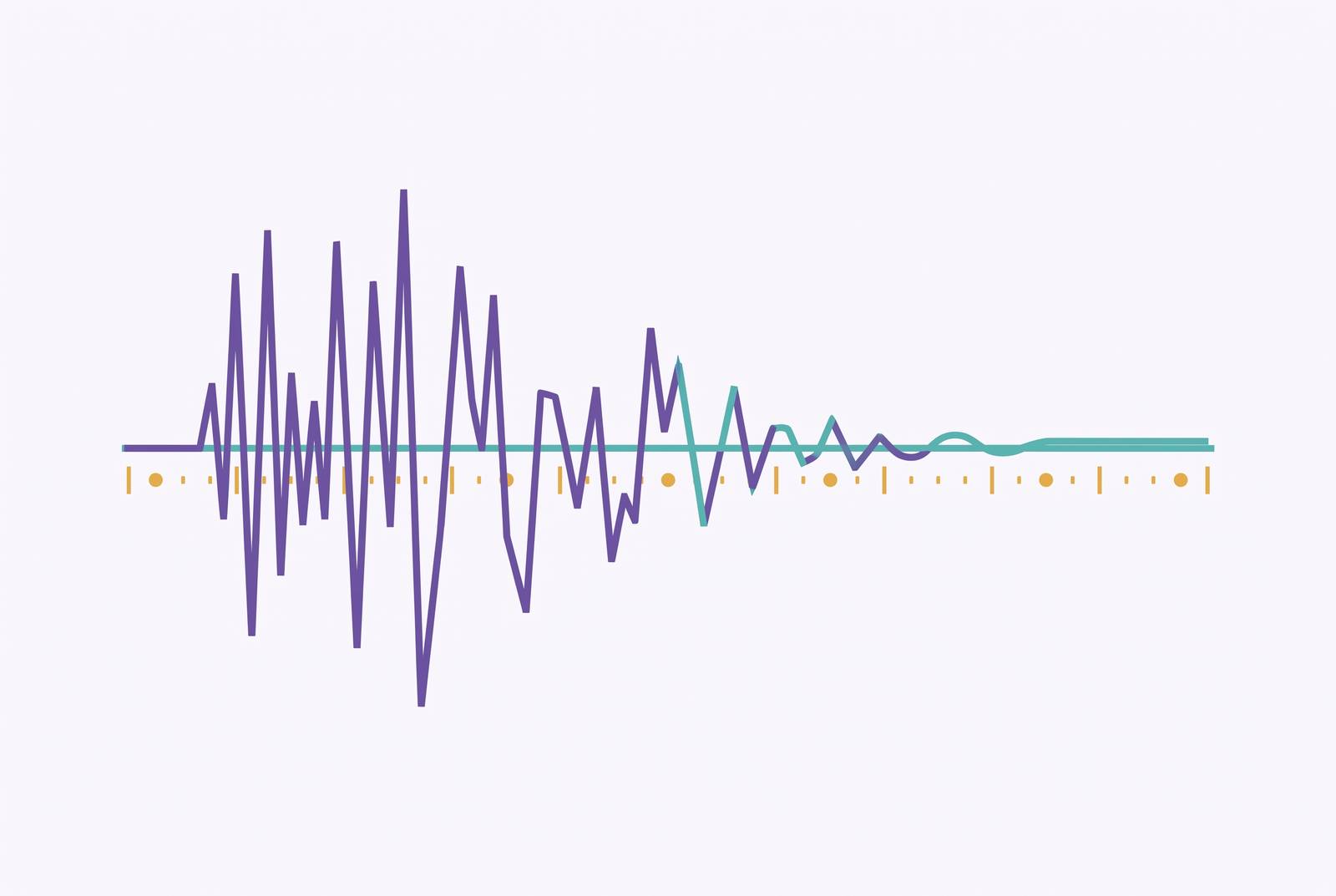
The most common reaction to inconsistent results is to treat the inconsistency as a flaw, either in the testing or in the body producing them. That reaction has it backward. In perimenopause, variability across results is a sign that the testing is accurately capturing a hormonal environment that is genuinely unstable, and the variation itself carries diagnostic information.
Take the case of a woman told her estradiol is "fine" while she's experiencing worsening PMS, breakthrough spotting, mood changes, or cycles that keep shifting in length. That result is technically accurate and still incomplete. A single estradiol value that falls inside a standard reference range says nothing about whether that value was climbing, falling, or about to swing in either direction, and in mid-perimenopause, that trajectory is often the more important fact.
The same logic applies to FSH. An FSH reading that comes back elevated on one test and normal on the next is not evidence of a lab error. It reflects the genuine month-to-month fluctuation that Harvard Health identifies as a defining feature of the perimenopausal transition. What carries diagnostic weight is the pattern formed across both readings taken together, not whichever single reading happens to get more attention.
Repeat testing can seem to just create more anxiety by giving a woman two confusing numbers instead of one, but that view gets the cause of the anxiety backward: uninterpreted variability is what produces anxiety, a single ambiguous result with no context to measure it against. A documented trajectory, built from repeated tests read together with clinical context, does the opposite. It turns an experience that otherwise feels random into a pattern that can actually be read. A baseline is the starting point of a record, and the record only becomes useful once it has more than one entry in it.
Symptoms that mimic perimenopause and the case for thyroid markers in the baseline
Fatigue, weight change, brain fog, thinning hair, mood shifts, disrupted sleep, and menstrual irregularity all appear on the perimenopause symptom list. Every one of them also appears on the hypothyroidism symptom list. Because both conditions tend to surface in the same decade of a woman's life, a baseline hormone panel drawn without thyroid markers risks missing, or misattributing, a condition that looks almost identical from the outside.
Some differentiators do exist, and applying them requires having the full panel in hand. Cycle variability itself, cycles that shorten, then skip, then stretch long, with the unpredictability as the defining feature, points toward perimenopause. A consistent shift in flow or frequency that holds steady across cycles without that same variability points more toward thyroid dysfunction. Cold intolerance, a slowed heart rate, constipation, hoarseness, and swelling cluster on the thyroid side of the picture. Hot flashes, night sweats, vaginal dryness, and cycle irregularity cluster on the hormonal side.
Skipping thyroid markers at baseline creates risk in both directions. Perimenopause symptoms can get misread as thyroid disease, sending a woman down a diagnostic path that doesn't match what's actually happening in her body. Or a real thyroid condition coexisting alongside perimenopause can go untreated because every symptom gets folded into "it's just hormones," when it isn't only that. A baseline panel that can speak to both thyroid function and reproductive hormone status is simply more useful than one that can only confirm or rule out a single diagnosis, because the two conditions are competing explanations for the same set of complaints, and a woman deserves a panel built to distinguish between them.
Building a meaningful baseline when cycles are irregular
Pulling the preceding sections together, a meaningful baseline for a woman with irregular cycles is a documented starting point, carrying a date, a clinical context, and a symptom record, built specifically to be repeated and compared against future draws, rather than a single set of numbers pulled on one lucky day.
In practice, that baseline centers on a small set of components. AMH anchors it, since it doesn't require cycle-day timing and reflects where ovarian reserve stands on its own trajectory. FSH and estradiol get drawn together, with the date and whatever cycle context exists (last period, current symptoms, amenorrhea duration) recorded alongside them, with the explicit intention of repeating that same pairing in four to six weeks to check for consistency. Progesterone, LH, thyroid markers, and androgens round out the fuller panel, giving the record enough breadth to catch what a narrower FSH-and-estradiol draw alone would miss.
None of this produces a verdict on day one. What it produces is a record, a first entry in a series that becomes genuinely informative only once a second and third entry exist beside it. For a woman whose cycles no longer offer a reliable day 3 to test from, that shift, from a single well-timed snapshot to a documented, repeated series, is what lets hormone testing do its actual job during perimenopause: not confirming a diagnosis in one draw, but tracking a transition as it actually unfolds.